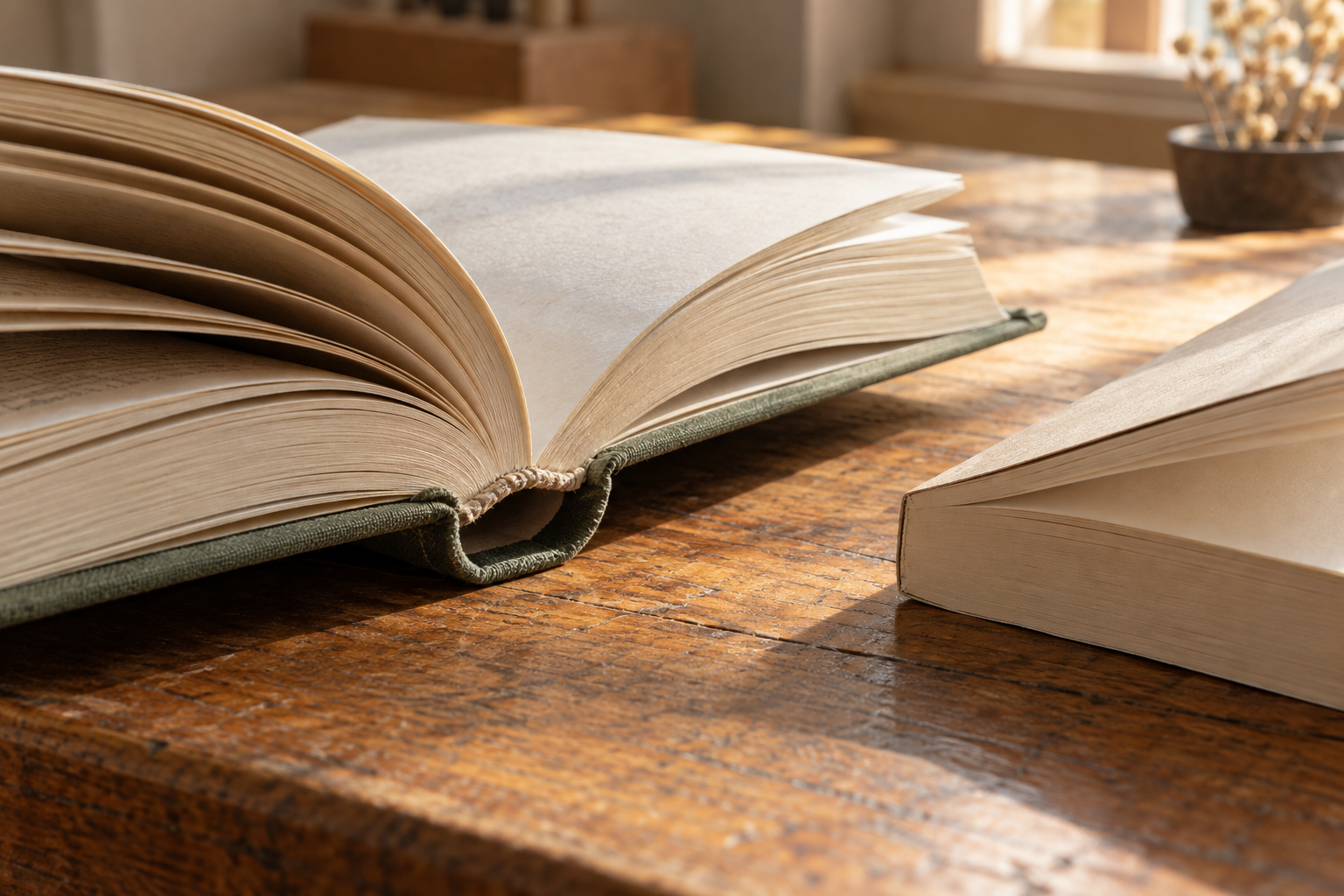
When a book binding changes the way a page opens
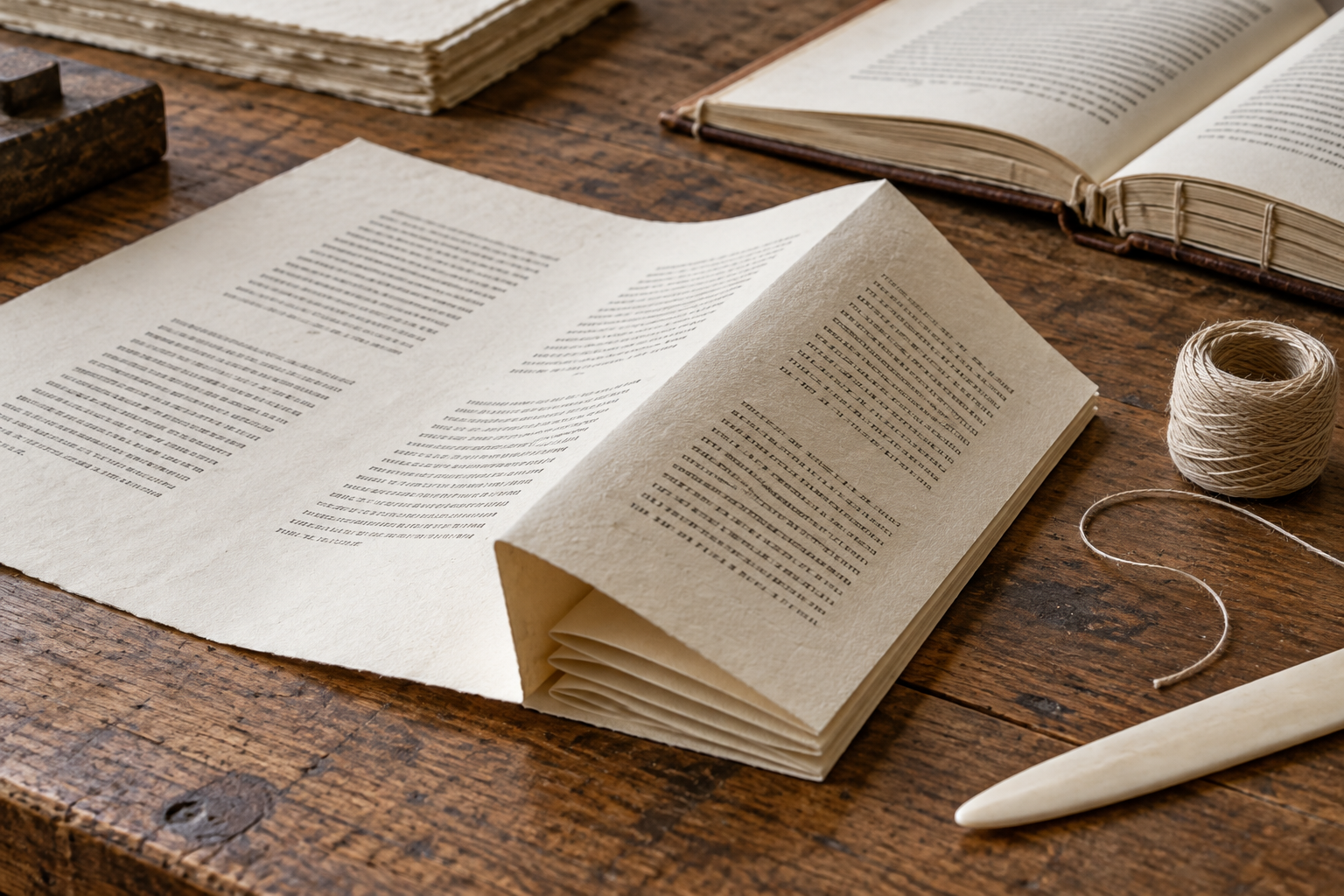
A page that lies flat or springs shut reflects decisions in the sewing, adhesive, spine linings, paper and cover joints. The opening book is a moving system.
About the author
I write about books and printing as material processes. My interests run from paper fibres and binding structures to the traces that production and use leave on a page.
I build each essay around a concrete question, read the underlying sources and separate observed results from interpretation. I want the details to remain clear enough that a reader can follow the argument and examine the evidence.
A page that lies flat or springs shut reflects decisions in the sewing, adhesive, spine linings, paper and cover joints. The opening book is a moving system.
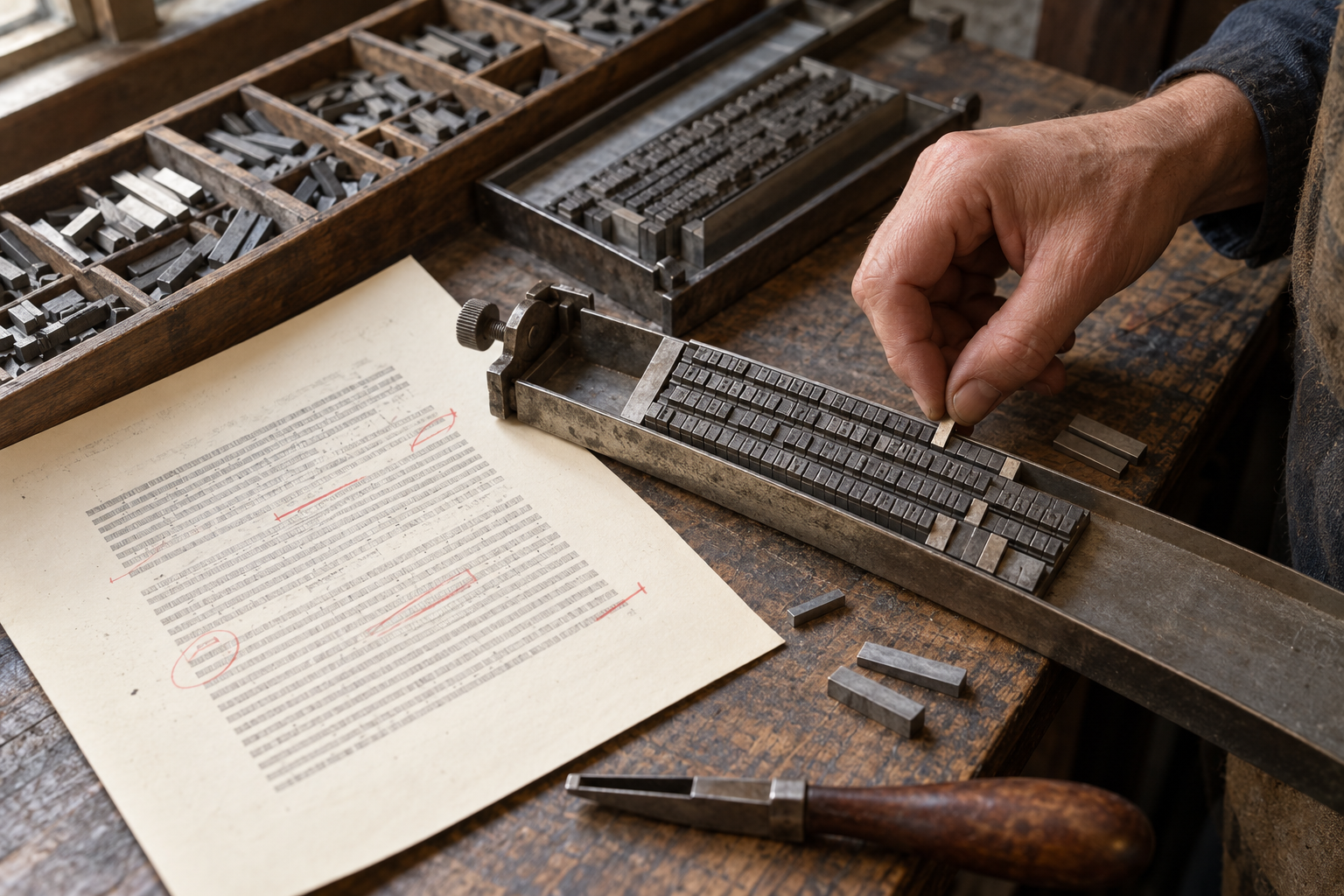
A clear printed page conceals the work of choosing type, fitting spaces, correcting proofs and arranging pages for the press. Old printer manuals show where that labour went.
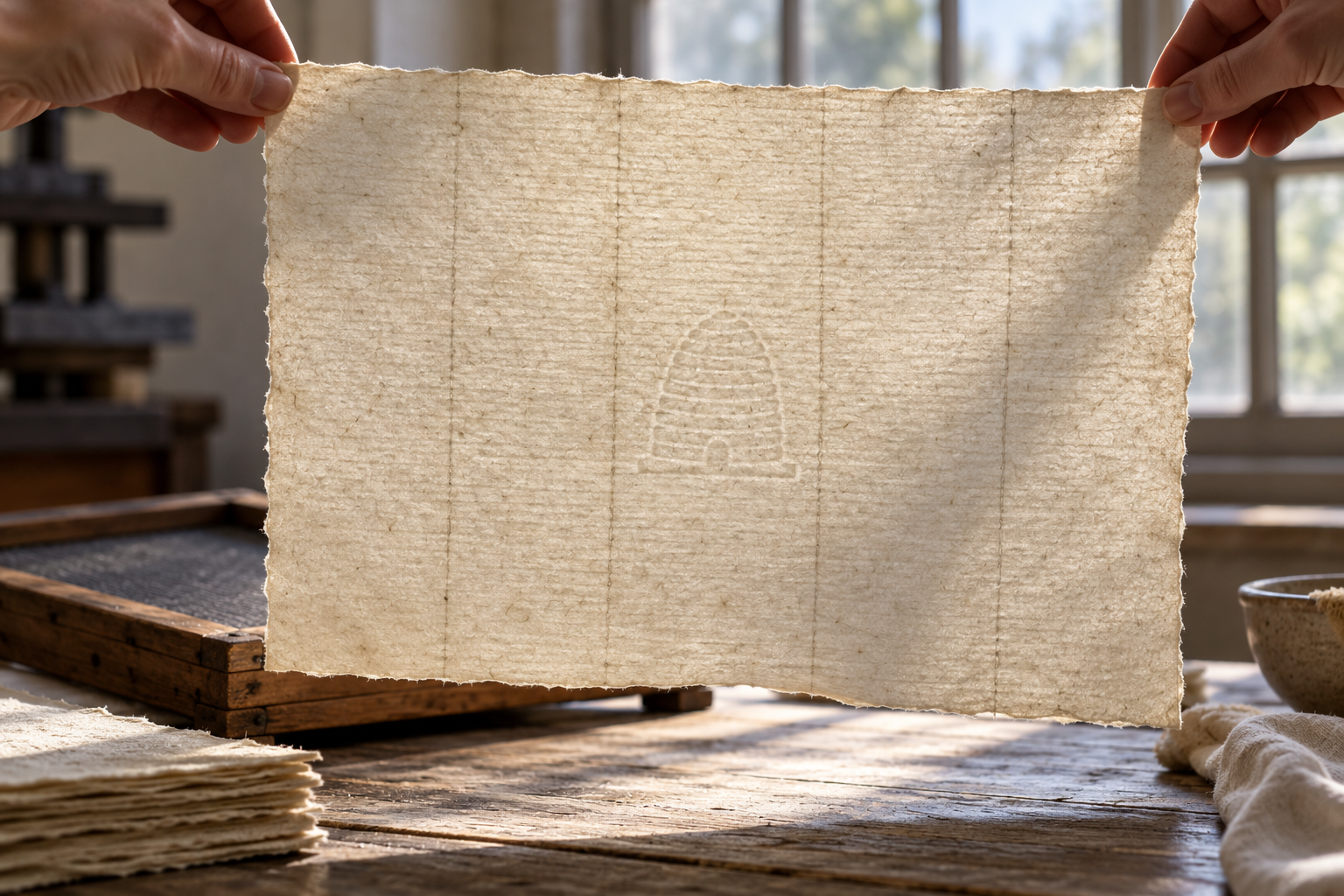
A watermark records a papermaking mould, not the day a letter was written. Its shape, position, neighbouring lines and matched sheets can reveal a paper's history when each inference is kept distinct.
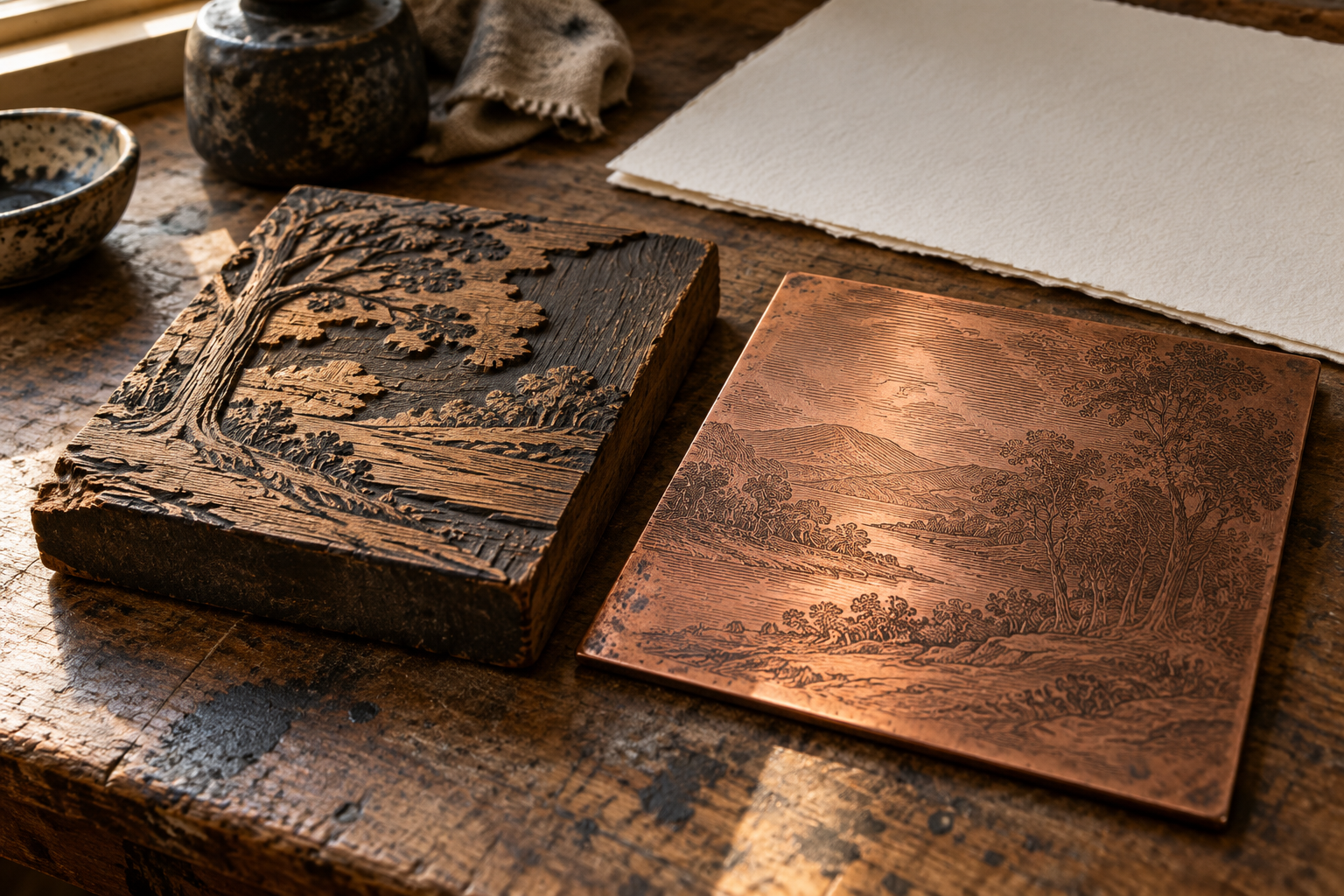
A woodcut prints from raised ridges; a copper engraving holds ink in grooves. Breaks, softened lines and retouching leave different clues in successive impressions.
Before an early printed book was sewn, its pages had to be placed on flat sheets in an order that looked wrong until the sheets were folded. Those folds still help readers and conservators reconstruct books that are damaged, incomplete or oddly made.